Margret Kroch-Frishman (1897–1972)
Identifier
Title
Type
Subject
Relation
Contributor
Birth Date
Birthplace
Death Date
Place of death
Occupation
Biography
Margret Kroch, known to friends and family as Grete, was one of seven children born in Leipzig to Martin Samuel (Schmaryahu) Kroch (1853–1926) and Hermine Marion (Hendele) Kroch (née Risch, 1857–1929). The Krochs were a prominent Jewish family in Leipzig, Margret's grandfather being the renowned Talmudic scholar Jankev Leib Kroch (1819–1898).
She studied printmaking at the Hochschule für Grafik und Buchkunst in Leipzig under Walter Tiemann followed by printmaking and painting at the Berlin Academy of Fine Arts under Hans Meid and Karl Hofer. There she also met Oskar Kokoschka and her future husband, Marcel Frishman, who she married 10 August 1923. During her student years in Berlin, she reportedly supported herself by working as a trapeze artist at the Circus Busch (Federica Frishman, unpublished notes on her husband Martin Julius Frishman (1932–2016), 8 August 2020). She also began contributing illustrations to German periodicals including Die Dame, Berliner Illustrierte and Die Jugend.
In 1933, with the advent of National Socialism, the Frishmans and their then one-year-old son Martin (born 19 July 1932) left Germany to work initially in Paris, then Copenhagen, and by 1934 Brussels, where they lived for a period at an arts centre for refugees at Berchem-Sainte-Agathe. In Brussels Marcel Frishman worked with Lotte Reiniger and Carl Koch on an animated film, Dream Circus (1936/37), inspired by Stravinsky’s Pulcinella though never finished owing to the outbreak of war. The Frishmans are believed to have later encouraged Reiniger and Koch to settle at the Abbey Art Centre.
In 1938 the Belgian authorities rejected the Frishmans' visa renewal, compelling them to return to Berlin where they experienced the trauma of Kristallnacht in November 1938. Hastily assembling exit papers, they escaped Germany 48 hours later possibly through Switzerland where one of Margret's uncles lived and the Kroch family had long holidayed (see Anne M. Mitchell, "Monasches and the Holocaust: Family Stories Part 1," Australian Jewish Historical Society Journal, 22, 3 (2015), p. 402). Their exit was enabled through securing visas to Australia where they were sponsored by one of Margret's unmarried sisters, Fanny Louise (Liese) Kroch (National Archives of Australia: series B4064, control symbol SCHEDULE 10/V271).
The Frishmans subsequently sailed from Toulon on the Orient Line RMS Ormonde, arriving in Fremantle on 25 April and disembarking in Melbourne on 1 May 1939 (see passenger arrivals list, National Archives of Australia: series K269, 25 APR 1939 ORMONDE). Margret's registration papers give her occupation as photographer and her address on arrival as 1a Dickens Street, St Kilda (National Archives of Australia: series B6531, NATURALISED/1946 - 1947/POLISH/FRISHMAN MARGRET). This was an art-deco three-storey block of flats, known as "La Rochelle," built in 1936 to the design of W. H. Merritt (City of Port Phillip Heritage Review, draft report). By the following year they had moved to nearby 108 Acland Street. The family changed the spelling of their surname from Frishmann to Frishman by deedpoll on 28 June 1939.
In Melbourne they joined another of Margret's recently arrived sisters, Emilie (known as Emmy) Monash, who was also a painter and whose husband, Leipzig patents lawyer Dr Bertholde Monash, was a first cousin of the Australian WWI general Sir John Monash. Bertholde Monash likewise sponsored many of his and his wife's family to come to Australia in 1938-39 (see Anne M. Mitchell, "Monasches and the Holocaust: Family Stories Part 1," Australian Jewish Historical Society Journal, 22, 3 (2015):395-449).
The Frishmans soon established a photography business called Studio Marcel, working from their flat at 108 Acland Street in St Kilda. They offered not only commerical photographic services but also reproduction and "artistic colouring" services (see their advertisement, The Australian Jewish Herald, 17 October 1940, p. 9). Both Frishmans donated specimens of their photography to an exhibition held to raise funds for the Red Cross, showing alongside another noted Jewish photographer Athol Shmith (see H.S., "For Red Cross: Exhibition of Photographs," The Australian Jewish Herald, November 28 1940, p. 3). The exhibition toured to Sydney the following year (see "Governor's Family All Keen Photographers" The Daily Telegraph, Sydney, 18 March 1941, p. 10), and Margret's work was mentioned as comprising "outdoor photographs" ("Sue sees Sydney," The Sun, Sydney, 17 March 1941, p. 7). Her Head of an eagle, exhibited at the Victorian Salon of Photography, was reproduced in The Australasian Photo-Review 48, no. 4 (April 1941): 128).
Kroch-Frishman held her first solo exhibition in Melbourne in the basement of Kozminsky Galleries in December 1943. Opened by sculptor Ola Cohn, it comprised 16 paintings of Australian and French subjects, 4 sculptures, and 8 etchings and watercolours. The catalogue (held in the State Library of Victoria AAA file for Kroch-Frishman) reveals a range of subjects from landscapes in Elwood (including "Caenwood" of Tennyson Street, Elwood, which was then until recently the home of 103-year-old Elizabeth Harriet Booth, whose death was reported in March that year), Toulon and Provence, including Olive Trees (Provence), loaned by Mrs M. Kaufman (likely another Leipzig connection, Marianne Kaufman née Monasch), as well as still life compositions of flowers and numerous portraits, including those of Collins Street photographer Athol Shmith and his sister Verna Lydia Shmith. She also exhibited etchings and watercolours. The exhibition received mixed press. Adrian Lawlor found the paintings suffered a little from too many different influences (Van Gogh, the Expressionists, and Bonnard), whereas the sculpture he found more traditional and "tasteful" (A. L. [Adrian Lawlor], "Three Art Shows Open Tomorrow," The Herald, Melbourne, 6 December 1943, p. 6), while Harold Herbert was not enamoured of the textures of either the paintings or the sculptures though admitted Frishman (as she was known) had "a full sense of design and composition" (Harold Herbert, "Art Exhibitions," The Argus, Melbourne, p. 9). George Bell on the other hand was impressed, finding the work vital and demonstrating "a full command of form" (George Bell, "Three Art Shows," The Sun-News Pictorial, Melbourne, 7 December 1943, p. 11).
In August 1945 Kroch-Frishman's second solo exhibition of paintings and sculptures at Kozminsky Galleries was opened by Professor of French A.R. Chisholm. It was reviewed it in highly favourable terms by the eminent Viennese architect Ernest Fooks, whose comments indicate the range of exhibits: "Whatever subject chosen, be it the expressive face of the mature man, or the soft features of the child, the human body or a small Street in South Yarra, crabs, flowers, or the desolate remnants of human habitation, Mrs K.F. [sic] contrives to suggest their innermost meaning, and is not satisfied with imitating nature as such" (Dr Ernest Fooks, "Margret Kroch-Frishman Exhibition", The Australian Jewish News, Melbourne, 17 August 1945, p. 7). The exhibition included Kroch-Frishman's portrait of violinist and cellist Issy Spivakovsky, which was soon afterwards illustrated in the same journal ("Margret Kroch-Frishman Exhibition," The Australian Jewish News, Melbourne, 24 August 1945, p. 7). Alan McCulloch found the works "show the benefit of the artist's Continental background and training. She is at her best, I feel, in her sensitive and well designed drawings and well realised sculptures. Her watercolours also are fresh and vigorous, and more convincing than her oils, which, although capably painted, are sometimes a little too broad in treatment" (Alan McCulloch, '"Art Exhibitions Reviewed ... Magaraet [sic] Kroch-Frishman", The Argus, Melbourne, 21 August 1945, p. 4).
Kroch-Frishman also took part in several group exhibitions in Melbourne, including Flower Paintings by Well-Known Artists at the Myer Gallery (May 1946) and a Jewish art festival (June 1948) where she again showed the portrait of Issy Spivakovsky. In August 1946 she also applied for copyright to two literary works, Conquerer and Fox Hunt, attesting to both her adeptness in writing in a new language and the breadth of her artistic skills (National Archives of Australia, series A1336, control symbol 43308 and 43309).
Both Frishmans applied to become naturalised British subjects in November 1946; this was granted in 1947 (NAA, series A715, control symbol 9/3019).
In September 1948 Margret Kroch-Frishman held a joint show with Marcel Frishman at the Velasquez Gallery, where she was billed as a "Parisian painter and sculptor." Despite the couple's financial hardships (their property in Germany having been confiscated and sold by the Nazis), the proceeds from the sale of catalogues were donated to the Free Kindergarten Union. Dr John Dale opened the exhibition, which included his portrait by Kroch-Frishman along with portraits of Professor Chisholm, John Yule, and Barbara Hockey (later Prof. of Sociology, Barbara Hocky Kaplan), and 15 other paintings including landscapes. She also showed 4 watercolours (including Avoca Street and Port Fairy) and 6 sculptures, which, as the titles indicate, were all portraits, including J.R. Rangachary (Indian Test Cricket Team), Mary Patterson, John Atisayam (possibly John Athisayam, who was then an Indian medical student in Melbourne and vice-president of the India Australia Society), Miss C. Tandler (possibly the same person of this name who sailed on the Ormonde from Naples to Melbourne in 1939), and "a young dancer". George Bell extolled the merits of the paintings as "virile statements in heavy impasto, of flowers and portraiture" with an "almost sculptural texture" that he found "agreeable in effect," and commended the portrait sculptures that demonstrated Kroch-Frishman's "feeling for form." (George Bell, "Kroch-Frishman," The Sun News, Melbourne, 2 October 1948, p. 11). Marcel Frishman showed 20 drawings in lithographic chalk of street scenes in Melbourne and France. Their son Martin Frishman was also mentioned in the review as having artistic inclinations and preparing to soon exhibit with his mother, though he later instead became an architect.
Following the death of Emmy Monash (30 December 1949), the Frishmans returned to Europe sailing from Sydney in March 1951, bound for Holland, and arriving in Liverpool 9 April 1951. The decision to come to London possibly involved Erwin Fabian, a fellow Berliner, sculptor and printmaker who, as a so-called “enemy alien,” was deported from England in 1940 on the notoriously overcrowded Dunera and had befriended the Frishmans in Melbourne before returning to London in 1949. Fabian may have learnt of the Abbey through his close friend and fellow artist-internee Klaus Friedeberger, who befriended Oliffe Richmond after the war at the East Sydney Tech shortly before Richmond’s residency at the Abbey in 1948–49. The Frishmans may additionally have heard of the Abbey through fellow Jewish artist Yosl Bergner whose good friend James Wigley showed at Velasquez Galleries a year before the Frishmans and in 1949 lived at the Abbey with his wife and son, or through Max Newton or Grahame and Inge King who left the Abbey and were in Melbourne prior to the Frishmans’ departure. Further, they may have known of Ohly through Kokoschka or Wilczynski, the latter having studied in Leipzig and Berlin around the same time as the Frishmans and later a regular visitor at the Frishamans’ home in London. Regardless of the precise connection, the Frishmans’ journey to the Abbey was the most circuitous of all the Abbey’s residents.
The Frishmans likely arrived at the Abbey Art Centre in 1951. By the end of 1951, Kroch-Frishman had begun exhibiting in London, showing two works at the Autumn Exhibition of Paintings, Sculptures and Drawings by Contemporary Jewish Artists at the Ben Uri Gallery (4 November - 2 December 1951): Drawbridge at Oudekerk (no. 27) and Forget-me-nots (no. 28). The following year, in December 1952, she was included in an Exhibition of Work by Artists of the Abbey Art Centre, at William Ohly's Berkeley Galleries. Her lithographed portrait of Black American contralto Marian Anderson was illustrated on the invitation and in an accompanying review.
Marcel died at the Abbey on 28 December 1952. Some time later, Kroch-Frishman moved with her son Martin to 17 Gerald Road, Belgravia, where, according to the BURU, "regular notable guests included historian Eric Hobsbawm, composer Thea Musgrave, painters Peter de Francia and Katerina Wilczynski, as well as writers Jakov Lind and John Berger and designer Yolanda Sonnabend, among others." She later moved to Steeles Road, Belsize Park, in 1968.
In 1956 Kroch-Frishman held a solo exhibition in Paris at the Galerie Marcel Bernhein (the long-running dealers in Impressionist art), while in 1957 she showed three works at the third and final Australian Artists' Association exhibition, held at the Imperial Institute, London, alongside Erwin Fabian. The two exhibitions demonstrated the breadth of her transnational connections.
Her exhibition of new etchings was held at The Everyman, Hampstead, in November to December 1960. The following year her work was included among nine contemporary British painters at Wildenstein Galleries, February 1961, the other exhibitors being Roderic Barrett, Brian Crouch, Geoffrey Genever, Roman Black, Garrick Palmer, Connie Fenn, Edward Wakeford, and the Duchess of Leeds (The Queen, London, 16/2/61, p. 6).
Two further solo shows were held: at the Galerie André Weil, Paris, 18 September - 1 October 1963; and at Tib Lane Gallery, Manchester, 1967. She also exhibited alongside Italian late-Futurist painters at Galleria d'Arte Giraldo, Treviso, 1966.
Editions Alecto published nine of her etchings in 1965. Examples of these are found in the Government Art Collection, UK.
Jane Eckett
16 January 2026
Bibliography
Alan McCulloch, 'Art Exhibitions Reviewed ... Magaraet [sic] Kroch-Frishman', The Argus, Melbourne, 21 August 1945, p. 4.
'Margret Kroch-Frishman Exhibition', The Australian Jewish News, Melbourne, 24 August 1945, p. 7 (including photograph of her portrait of violinist and cellist Issy Spivakovsky, exhibited at Kozminsky Galleries).
Alan McCulloch, 'Art Exhibitions Reviewed: Flower Paintings', The Argus, Melbourne, 30 April 1946, p. 8.
'Preview of Art Festival', The Australian Jewish News, Melbourne, 11 June 1948, p. 8.
F.F. [Frank Fitzgerald], 'Exhibition of Jewish Art', The Argus, Melbourne, 17 June 1948, p. 6.
'The Life of Melbourne', The Argus, Melbourne, 21 September 1948, p. 7.
George Bell, "Kroch-Frishman," The Sun News, Melbourne, 2 October 1948, p. 11.
'Mrs. Emmy Monash' [obituary for Margret Kroch-Frishman's sister with family biographical detail], The Australian Jewish News, Melbourne, 6 January 1950, p. 3.
'Family returned last week to Holland', The Australian Jewish News, Melbourne, 16 March 1951, p. 2.
Ann M. Mitchell, "Monasches and the Holocaust: Family Stories Part 1," Australian Jewish Historical Society Journal, 22, 3 (2015):395-449/
Federica Frishman, unpublished notes on her husband Martin Julius Frishman (1932–2016), 8 August 2020.
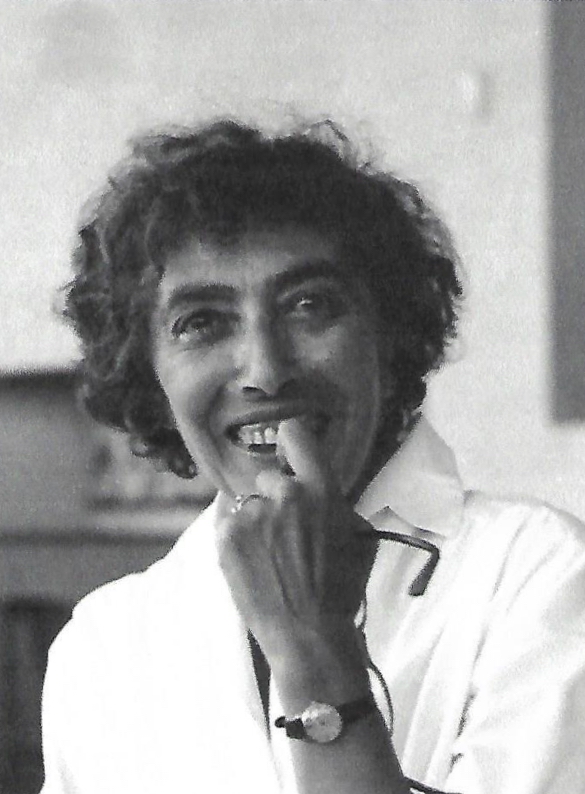
Photograph (i)
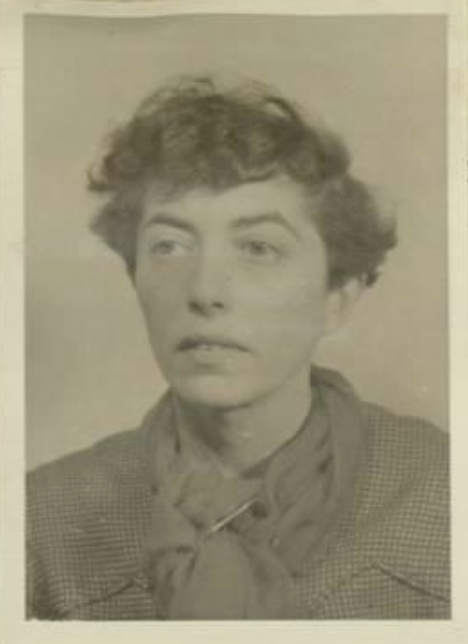
Photograph (ii)
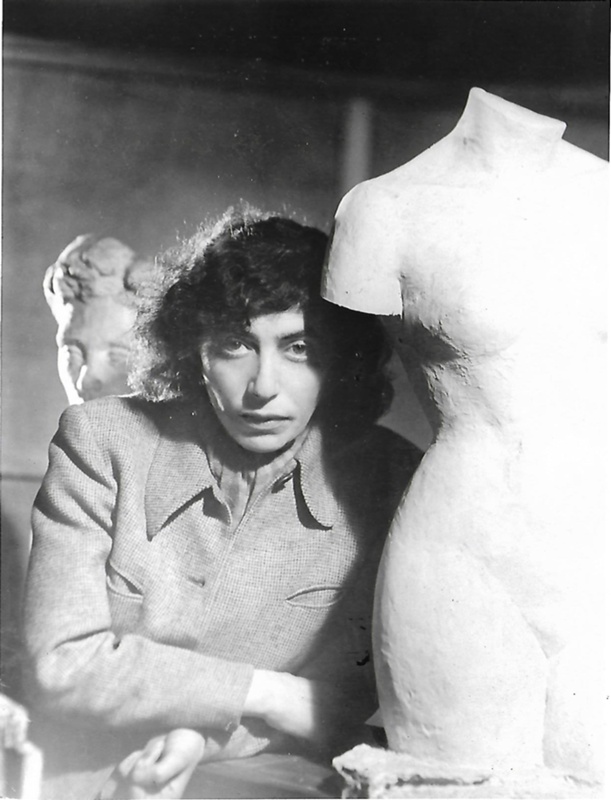
Margret Kroch-Frishman in Berlin. Photograph courtesy the artist's estate, via the Ben Uri Research Unit.