Marcel Frishman (1900–1952)
Identifier
151.0000
Title
Marcel Frishman (1900–1952)
Creator
Variant spellings: Marcel Boleslaw Frishman, Marcel Frishmann, Marcel Fishmann, Marcel Frischmann
Type
person
Subject
Frishman, Marcel, 1900–1952.
Caricatures and cartoons.
Caricatures and cartoons.
Relation
Contributor
Jane Eckett
Birth Date
2 August 1900
Birthplace
Łódź, Congress Kingdom of Poland, Russian Empire (now Poland)
Death Date
1952
Place of death
London, England
Occupation
draughtsman, illustrator, cartoonist
Biography
Born in Łódź in 1900 to a Jewish family, the Russian pogroms of 1904 caused Frishman's family to flee west into Germany. Settling in Berlin he attended school at the Fichtegymnasium, enjoying Latin and Greek. His aptitude for art was recognised by his teacher, Alfred Thon, who gathered Frishman into a small group of talented students, including Peter von Hamm (who would later work as a translator), Günther Franke (who became a prominent if controversial Munich gallerist who was later accused of having profitted from the Nazi's purge of modern art), and Walter Herzberg (who, like Frishman, would become a satirical cartoonist and who Frishman tried in vain to help escape the Nazis; he was murdered at Auschwitz in 1943). The group shared art books and magazines with each other and remained close friends until 1938 when National Socialism forced their dispersal.
After completing school, Frishman's parents arranged an apprenticeship for him in the metal industry in Mannheim. However, Mannheim's art gallery proved more interesting to him. Realising he wanted to pursue art, he abandoned the apprenticeship and returned to Berlin to study at the Unterrichtsanstalt des Kunstgewerbemuseums Berlin (Teaching Institute of the Museum of Decorative Arts Berlin), on Prinz-Albrecht-Straße, under renowned graphic artist Professor Emil Orlík. From there he progressed to the Berlin Academy, studying with impressionist graphic artist Hans Meid. At the Berlin Academy, he met his future wife, Margret Kroch-Frishman. They bonded over their shared interest in modern art, particularly German Expressionism, and took long walks around Berlin and down by the ports, which were always a favoured location for him. The pair married in 1923.
Frishman began selling illustrations to German periodicals, including Die Jugend, Berliner Tageblatt, Der Querschnitt and Uhu. As a result, in 1926 he was offered employment in Munich with the leading political and satirical magazine Simplicissimus. As one of their youngest artists on staff, Frishman produced hundreds of illustrations for Simplicissimus until 1933, when the National Socialists clamped down on the formerly liberal magazine. As his friend Gustav Regler recalled, Frishman's drawings were characterised by "minimal lines, clarity of form and self-assurance of composition, with themes of everyday life, not recorded naturalistically, but represented in a new form with psychological insight" (Regler, typescript notes on Frishman, estate of Marcel Frishman). These were usually drawn in the privacy of the studio, from memory of figures encountered previously in the street.
Regler also recalled Frishman's talent as a musician (he was related to the German-Polish Jewish pianist and composer Moritz Moszkoski) and his voracious appetite for books. In English his taste ran to George Bernard Shaw, Hemingway and DH Lawrence, but his passion was for the Russians: Gogol, Turgenev, and Pushkin.
In 1933, when the National Socialists tooks over Simplicissimus, Frishman was faced with an ultimatum: collaborate with the Nazis or leave Germany within 24 hours. He chose the latter, fleeing to France with Margret and their one-year-old son Martin. In Paris Frishman worked with Lucian Vogel in an attempt to revive the magazine Assiette au beurre. When the project failed after only one issue, the family moved on to Copenhagen, where Frishman worked as a freelance illustrator (his reputation from Simplicissimus having preceded him). In 1934 they moved to Brussels, and lived for a period at an arts centre for refugees at Berchem-Sainte-Agathe. In Brussels Frishman worked with Lotte Reiniger and Carl Koch on an animated film, Dream Circus (1936/37), inspired by Stravinsky’s Pulcinella though never finished owing to the outbreak of war. The Frishmans are believed to have later encouraged Reiniger and Koch to settle at the Abbey Art Centre.
Marcel visited Berlin briefly at the end of 1937 to collect his cameras and other materials needed for the Brussels work, and while there realised the imminent dangers for Jewish people. However, in 1938 the Belgian authorities rejected the Frishman family's visa renewals, compelling them to return to Berlin where they experienced the trauma of Kristallnacht in November.
Hastily assembling exit papers, they escaped Germany 48 hours later. Their exit was enabled through securing visas to Australia, organised by Margret's elder sister, Emilie (known as Emmy) Monash, who was married to a cousin of Sir John Monash, and sponsored by another of her sisters, Fanny Louise (Liese) Kroch (National Archives of Australia: series B4064, control symbol SCHEDULE 10/V271). The Frishmans subsequently sailed from Toulon on the Orient Line RMS Ormonde, arriving in Fremantle on 25 April and disembarking in Melbourne on 1 May 1939 (see passenger arrivals list, National Archives of Australia: series K269, 25 APR 1939 ORMONDE).
Year later, Martin Frishman's wife, Federica Frishman, recounted the family's dramaric journey:
"The exit from Germany to Toulon by train was traumatic. At the border between Germany and France, the train was stopped by a very drunk top SS Commander who mistook Marcel for an old school friend and invited him for more drinks, leaving Margret and Martin waiting on the train, fearing that this was the end. Fortunately Marcel was a very good clown and for one hour he pretended to be this Nazi’s old friend, laughing and drinking together. He returned no worse for the experience. The train was allowed to continue and Toulon was reached. They embarqued on the last trip of the Orient Line RMS Ormonde going to Melbourne. This was a 6 weeks voyage and Martin was the only happy member of the family: being on the boat was a new and exciting adventure for him" (Federica Frishman, unpublished notes on her husband Martin Julius Frishman (1932–2016), 8 August 2020).
The Frishmans soon established a photography business called Studio Marcel, working from their flat at 108 Acland Street in St Kilda, and offering not only commerical photographic services but also reproduction and "artistic colouring" services (see their advertisement, The Australian Jewish Herald, 17 October 1940, p. 9). Both Frishmans donated specimens of their photography to an exhibition held to raise funds for the Red Cross, showing alongside another noted Jewish photographer Athol Shmith (see H.S., "For Red Cross: Exhibition of Photographs," The Australian Jewish Herald, November 28 1940, p. 3). The exhibition toured to Sydney the following year (see "Governor's Family All Keen Photographers" The Daily Telegraph, Sydney, 18 March 1941, p. 10).
However, photography was not enough to live on and Marcel struggled to find employment in Melbourne as an illustrator. He was compelled instead to take work in a steel factory, and also served from 1942 with the Royal Australian Air Force (RAAF).
In 1948 the Frishmans held a joint exhibition at Velasquez Galleries, though the Melbourne press gave it scant notice. Altogether the pair spent thirteen years in Australia, struggling financially (their house and property in Germany having been confiscated by the Nazis and sold) and with little recognition. Marcel's health consequently suffered.
The family returned to Europe, sailing from Sydney on the Cameronia and arriving in Liverpool on 9 April 1951. They appear in passenger arrival records as: Marcel Frishman, photographer, age 50; Margaret Frishman, sculptor, age 55; and Martin Frishman, student, age 18, latterly of Australia, bound for Holland and with a nominated address of Poste Restante, Zutra Post, Amsterdam (nos. 345, 346 and 347 on the shipping list).
They settled immediately at the Abbey Art Centre, from where Frishman began supplying illustrations to the Swiss satirical magazine Nebelfpalter. However, his health did not improve and he died of a heart attack at the Abbey in 1952.
A commemorative book was issued in 1957 by Bruno Cassirer with a selection of Frishman's drawings and texts by John Berger and George Besson. Two retrospectives were held the following year at Upper Grosvenor Galleries and Marlborough Fine Art, the latter showing fifty of his drawings.
After completing school, Frishman's parents arranged an apprenticeship for him in the metal industry in Mannheim. However, Mannheim's art gallery proved more interesting to him. Realising he wanted to pursue art, he abandoned the apprenticeship and returned to Berlin to study at the Unterrichtsanstalt des Kunstgewerbemuseums Berlin (Teaching Institute of the Museum of Decorative Arts Berlin), on Prinz-Albrecht-Straße, under renowned graphic artist Professor Emil Orlík. From there he progressed to the Berlin Academy, studying with impressionist graphic artist Hans Meid. At the Berlin Academy, he met his future wife, Margret Kroch-Frishman. They bonded over their shared interest in modern art, particularly German Expressionism, and took long walks around Berlin and down by the ports, which were always a favoured location for him. The pair married in 1923.
Frishman began selling illustrations to German periodicals, including Die Jugend, Berliner Tageblatt, Der Querschnitt and Uhu. As a result, in 1926 he was offered employment in Munich with the leading political and satirical magazine Simplicissimus. As one of their youngest artists on staff, Frishman produced hundreds of illustrations for Simplicissimus until 1933, when the National Socialists clamped down on the formerly liberal magazine. As his friend Gustav Regler recalled, Frishman's drawings were characterised by "minimal lines, clarity of form and self-assurance of composition, with themes of everyday life, not recorded naturalistically, but represented in a new form with psychological insight" (Regler, typescript notes on Frishman, estate of Marcel Frishman). These were usually drawn in the privacy of the studio, from memory of figures encountered previously in the street.
Regler also recalled Frishman's talent as a musician (he was related to the German-Polish Jewish pianist and composer Moritz Moszkoski) and his voracious appetite for books. In English his taste ran to George Bernard Shaw, Hemingway and DH Lawrence, but his passion was for the Russians: Gogol, Turgenev, and Pushkin.
In 1933, when the National Socialists tooks over Simplicissimus, Frishman was faced with an ultimatum: collaborate with the Nazis or leave Germany within 24 hours. He chose the latter, fleeing to France with Margret and their one-year-old son Martin. In Paris Frishman worked with Lucian Vogel in an attempt to revive the magazine Assiette au beurre. When the project failed after only one issue, the family moved on to Copenhagen, where Frishman worked as a freelance illustrator (his reputation from Simplicissimus having preceded him). In 1934 they moved to Brussels, and lived for a period at an arts centre for refugees at Berchem-Sainte-Agathe. In Brussels Frishman worked with Lotte Reiniger and Carl Koch on an animated film, Dream Circus (1936/37), inspired by Stravinsky’s Pulcinella though never finished owing to the outbreak of war. The Frishmans are believed to have later encouraged Reiniger and Koch to settle at the Abbey Art Centre.
Marcel visited Berlin briefly at the end of 1937 to collect his cameras and other materials needed for the Brussels work, and while there realised the imminent dangers for Jewish people. However, in 1938 the Belgian authorities rejected the Frishman family's visa renewals, compelling them to return to Berlin where they experienced the trauma of Kristallnacht in November.
Hastily assembling exit papers, they escaped Germany 48 hours later. Their exit was enabled through securing visas to Australia, organised by Margret's elder sister, Emilie (known as Emmy) Monash, who was married to a cousin of Sir John Monash, and sponsored by another of her sisters, Fanny Louise (Liese) Kroch (National Archives of Australia: series B4064, control symbol SCHEDULE 10/V271). The Frishmans subsequently sailed from Toulon on the Orient Line RMS Ormonde, arriving in Fremantle on 25 April and disembarking in Melbourne on 1 May 1939 (see passenger arrivals list, National Archives of Australia: series K269, 25 APR 1939 ORMONDE).
Year later, Martin Frishman's wife, Federica Frishman, recounted the family's dramaric journey:
"The exit from Germany to Toulon by train was traumatic. At the border between Germany and France, the train was stopped by a very drunk top SS Commander who mistook Marcel for an old school friend and invited him for more drinks, leaving Margret and Martin waiting on the train, fearing that this was the end. Fortunately Marcel was a very good clown and for one hour he pretended to be this Nazi’s old friend, laughing and drinking together. He returned no worse for the experience. The train was allowed to continue and Toulon was reached. They embarqued on the last trip of the Orient Line RMS Ormonde going to Melbourne. This was a 6 weeks voyage and Martin was the only happy member of the family: being on the boat was a new and exciting adventure for him" (Federica Frishman, unpublished notes on her husband Martin Julius Frishman (1932–2016), 8 August 2020).
The Frishmans soon established a photography business called Studio Marcel, working from their flat at 108 Acland Street in St Kilda, and offering not only commerical photographic services but also reproduction and "artistic colouring" services (see their advertisement, The Australian Jewish Herald, 17 October 1940, p. 9). Both Frishmans donated specimens of their photography to an exhibition held to raise funds for the Red Cross, showing alongside another noted Jewish photographer Athol Shmith (see H.S., "For Red Cross: Exhibition of Photographs," The Australian Jewish Herald, November 28 1940, p. 3). The exhibition toured to Sydney the following year (see "Governor's Family All Keen Photographers" The Daily Telegraph, Sydney, 18 March 1941, p. 10).
However, photography was not enough to live on and Marcel struggled to find employment in Melbourne as an illustrator. He was compelled instead to take work in a steel factory, and also served from 1942 with the Royal Australian Air Force (RAAF).
In 1948 the Frishmans held a joint exhibition at Velasquez Galleries, though the Melbourne press gave it scant notice. Altogether the pair spent thirteen years in Australia, struggling financially (their house and property in Germany having been confiscated by the Nazis and sold) and with little recognition. Marcel's health consequently suffered.
The family returned to Europe, sailing from Sydney on the Cameronia and arriving in Liverpool on 9 April 1951. They appear in passenger arrival records as: Marcel Frishman, photographer, age 50; Margaret Frishman, sculptor, age 55; and Martin Frishman, student, age 18, latterly of Australia, bound for Holland and with a nominated address of Poste Restante, Zutra Post, Amsterdam (nos. 345, 346 and 347 on the shipping list).
They settled immediately at the Abbey Art Centre, from where Frishman began supplying illustrations to the Swiss satirical magazine Nebelfpalter. However, his health did not improve and he died of a heart attack at the Abbey in 1952.
A commemorative book was issued in 1957 by Bruno Cassirer with a selection of Frishman's drawings and texts by John Berger and George Besson. Two retrospectives were held the following year at Upper Grosvenor Galleries and Marlborough Fine Art, the latter showing fifty of his drawings.
Bibliography
John Berger, Marcel Frishman (Bruno Cassirer, Oxford, 1957).
Federica Frishman, unpublished notes on her husband Martin Julius Frishman (1932–2016), 8 August 2020.
"Marcel Frishman artist," Ben Uri Research Unit, https://www.buru.org.uk/contributor/marcel-frishman
Federica Frishman, unpublished notes on her husband Martin Julius Frishman (1932–2016), 8 August 2020.
"Marcel Frishman artist," Ben Uri Research Unit, https://www.buru.org.uk/contributor/marcel-frishman
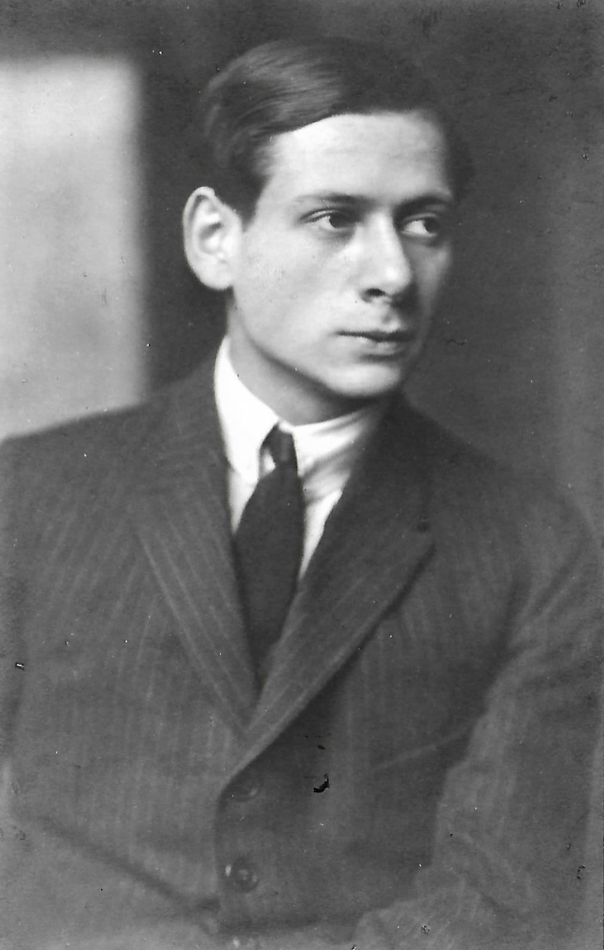
Photograph (i)
Marcel Frishman, 1930s, courtesy the Frishman estate
Date submitted
15 January 2026
Date modified
29 January 2026
Collection
Citation
Variant spellings: Marcel Boleslaw Frishman, Marcel Frishmann, Marcel Fishmann, Marcel Frischmann, “Marcel Frishman (1900–1952),” The Abbey Art Centre Digital Repository, accessed October 27, 2026, https://omeka.cloud.unimelb.edu.au/abbey-art-centre/items/show/1345.