Katerina Wilczynski (also known as Kathé, Kaete and Kate Wilczynski) (1894–1978)
Identifier
326.0000
Title
Katerina Wilczynski (also known as Kathé, Kaete and Kate Wilczynski) (1894–1978)
Type
person
Contributor
Jane Eckett
Birth Date
7 July 1894
Birthplace
Poznań, Poland
Death Date
October 1978
Place of death
12 Bedford Gardens, Kensington, London, England
Occupation
painter, graphic artist, illustrator, etcher, printmaker
Biography
Katerina Ulricke Wilczynski was born in Poznań, Poland, and educated in Germany. After studying at the Berlin School for Arts and Crafts, the Academy of Fine Arts in Berlin, and the Leipzig Academy for Graphic Arts, she worked as an illustrator in Germany in the 1920s. Awarded the Prix de Rome in 1930, she studied at the Accademia Tedesca Villa Massimo for one year on a scholarship and throughout the 1930s lived in Rome, where she was commissioned 'to draw and paint many ancient buildings, where demolition was required by replanning of the city'; these were published in book form shortly after the war, in 1946 (Katerina Wilczynski, Rome, London, Nicholson & Watson [1946], text from publisher's blurb on book jacket). A selection of her drawings of Rome, Venice and Verona, from 1934–1936, are now in the V&A collection.
Fleeing Italy for England in 1938, her name appears in the 1939 England and Wales Register, living at Redgates, Cannington, Devon, and listed as an 'artist (painter)' (The National Archives; Kew, London, England; 1939 Register; Reference: RG 101/6850C).
During the war she gained permission from the Central Institute of Art and Design (CIAD) to paint views of bombed churches in London. Five of these were offered to the Imperial War Museum, of which one was purchased for 5 guineas in February 1941 (Imperial War Museum, London, war artist archive, file on Miss Kaete Wilczynski, ART/WA2/03/143). Another watercolour of bombed buildings in East London, Gresham Street, 1941, is now in the collection of Southwark Heritage Centre and Walworth Library.
She also produced during the war years a portrait series called Oxford Figures, depicting English and European emigré intellectuals such as pyschoanalyst and translator and editor of Jung Dr Gerhard Adler, German-British art historian and East-Asian specialist Dr William Cohn, historian Lord David Cecil, literary scholar Nevill Coghill, art critic Denys Sutton, composer Egon Wellesz, and the Australian-born British classical scholar Professor Gilbert Murray. These are now all in the collection of the Ashmoleon Museum, Oxford.
William Ohly gave her two solo exhibitions at the Berkley Galleries: Drawings and Watercolours, in October to November 1942, and again in 1944. The connection was possibly made through William Cohn, who wrote several catalogue essays for Ohly. Wilczynski's gently comical Christmas card to Ohly from December 1943, headed Homage à William Ohly: Artist’s Hope and Help, depicts Ohly receiving a queue of artists–folios under their arms–and various vignettes inscribed 'sehr gescheit [very nice] / Poor Papache / but even without words / not on speaking terms'. She signed it 'Kat. Wilczynski – the grateful'.
At the time of the December 1939 'alien internees' tribunal, she was living at 77 Bedford Gardens, Kensington (The National Archives; Kew, London, England; HO 396 WW2 Internees (Aliens) Index Cards 1939-1947; Reference Number: HO 396/102), and by 1949 she was registered in the electoral rolls at 12 Bedford Gardens, Kensington, at which address she was still living at the time of her death some three decades later.
She appears not to have ever lived at the Abbey but was a friend of former Abbey-resident, Margret Kroch-Frishman—possibly through Ohly's introduction (see Ben Uri Research Unit, 'Margret Kroch-Frishman, artist').
Throughout the 1940s she was included in several group shows of contemporary Jewish artists at the Ben Uri Gallery. She also held an exhibition of architectural drawings at Roland, Browse & Delbanco in 1946, and, at the same gallery, in 1949, a series she called 'Mediterranean Fantasies'.
After the war she resumed travelling through Europe, staying in Paris, Spain and Greece, and producing numerous illustrated books including travel books. An early example of such, An artist's diary in pictures; pen and ink drawings of a continental journey (The Hague: A.A.M. Stols; Oxford: Bruno Cassirer, 1949), carried a preface by the influential British art critic Eric Newton. She had supplied drawings to influential emigre publisher Bruno Cassirer since 1946, illustrating works on architecture and Ovid (Bruno Cassirer Publishers Ltd. Oxford 1940–1990: An Annotated Bibliography with Essays, ed. Jutta Weber and Rahel E. Feilchenfeldt, V&R Unipress, 2016, pp. 100–2).
A retrospective of her work was held at the New Art Centre, Chelsea, in 1980.
Jane Eckett
13 August 2021
Fleeing Italy for England in 1938, her name appears in the 1939 England and Wales Register, living at Redgates, Cannington, Devon, and listed as an 'artist (painter)' (The National Archives; Kew, London, England; 1939 Register; Reference: RG 101/6850C).
During the war she gained permission from the Central Institute of Art and Design (CIAD) to paint views of bombed churches in London. Five of these were offered to the Imperial War Museum, of which one was purchased for 5 guineas in February 1941 (Imperial War Museum, London, war artist archive, file on Miss Kaete Wilczynski, ART/WA2/03/143). Another watercolour of bombed buildings in East London, Gresham Street, 1941, is now in the collection of Southwark Heritage Centre and Walworth Library.
She also produced during the war years a portrait series called Oxford Figures, depicting English and European emigré intellectuals such as pyschoanalyst and translator and editor of Jung Dr Gerhard Adler, German-British art historian and East-Asian specialist Dr William Cohn, historian Lord David Cecil, literary scholar Nevill Coghill, art critic Denys Sutton, composer Egon Wellesz, and the Australian-born British classical scholar Professor Gilbert Murray. These are now all in the collection of the Ashmoleon Museum, Oxford.
William Ohly gave her two solo exhibitions at the Berkley Galleries: Drawings and Watercolours, in October to November 1942, and again in 1944. The connection was possibly made through William Cohn, who wrote several catalogue essays for Ohly. Wilczynski's gently comical Christmas card to Ohly from December 1943, headed Homage à William Ohly: Artist’s Hope and Help, depicts Ohly receiving a queue of artists–folios under their arms–and various vignettes inscribed 'sehr gescheit [very nice] / Poor Papache / but even without words / not on speaking terms'. She signed it 'Kat. Wilczynski – the grateful'.
At the time of the December 1939 'alien internees' tribunal, she was living at 77 Bedford Gardens, Kensington (The National Archives; Kew, London, England; HO 396 WW2 Internees (Aliens) Index Cards 1939-1947; Reference Number: HO 396/102), and by 1949 she was registered in the electoral rolls at 12 Bedford Gardens, Kensington, at which address she was still living at the time of her death some three decades later.
She appears not to have ever lived at the Abbey but was a friend of former Abbey-resident, Margret Kroch-Frishman—possibly through Ohly's introduction (see Ben Uri Research Unit, 'Margret Kroch-Frishman, artist').
Throughout the 1940s she was included in several group shows of contemporary Jewish artists at the Ben Uri Gallery. She also held an exhibition of architectural drawings at Roland, Browse & Delbanco in 1946, and, at the same gallery, in 1949, a series she called 'Mediterranean Fantasies'.
After the war she resumed travelling through Europe, staying in Paris, Spain and Greece, and producing numerous illustrated books including travel books. An early example of such, An artist's diary in pictures; pen and ink drawings of a continental journey (The Hague: A.A.M. Stols; Oxford: Bruno Cassirer, 1949), carried a preface by the influential British art critic Eric Newton. She had supplied drawings to influential emigre publisher Bruno Cassirer since 1946, illustrating works on architecture and Ovid (Bruno Cassirer Publishers Ltd. Oxford 1940–1990: An Annotated Bibliography with Essays, ed. Jutta Weber and Rahel E. Feilchenfeldt, V&R Unipress, 2016, pp. 100–2).
A retrospective of her work was held at the New Art Centre, Chelsea, in 1980.
Jane Eckett
13 August 2021
Bibliography
Gretel Wagner (ed.), Katerina Wilczynski, exh. cat., Berlin: Kunstbibliothek der staatlichen Museen, Preussischer Kulturbesitz, 1975.
Jutta Vinzent, Identity and Image: refugee artists from Nazi Germany in Britain (1933-1945), Kromsdorf/Weimar: VDG Verlag (Schriften der Guernica-Gesellschaft, 16), 2006, p. 31.
Jutta Weber and Rahel E. Feilchenfeldt (eds), Bruno Cassirer Publishers Ltd. Oxford 1940–1990: An Annotated Bibliography with Essays, V&R Unipress, 2016, pp. 100–2.
'Katerina Wilczynski (1894-1978), Artist', National Portrait Gallery, London.
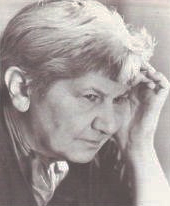
Photograph (i)
Katerina Wilczynski, author photograph from the cover of Homage to Greece, London: Macmillan and Co., 1964
Date submitted
12 August 2021
Date modified
3 June 2022
Citation
“Katerina Wilczynski (also known as Kathé, Kaete and Kate Wilczynski) (1894–1978),” The Abbey Art Centre Digital Repository, accessed October 27, 2026, https://omeka.cloud.unimelb.edu.au/abbey-art-centre/items/show/1009.