
ZELENKA, Gio. Dis.
Title
ZELENKA, Gio. Dis.
Description
ZELENKA, Jan (Lukáš Ignatius) Dismas (b Louňovice pod Blaníkem 1679–d Dresden 1745), [Cantate. Ad Sepulchu[m] Sacru[m]]: No 2. Deus Dux, III/Z/25/3
D-Dl
Mus. 2358-D-76
Composer
ZELENKA, Gio. Dis.
Uniform Composer
ZELENKA, Jan (Lukáš Ignatius) Dismas (b Louňovice pod Blaníkem 1679–d Dresden 1745)
Title (Catalogo)
[Cantate. Ad Sepulchu[m] Sacru[m]]: No 2. Deus Dux
Location (1765)
Schranck III; Fach 25; Lage 3
SFL_combination
III/Z/25/3
Scoring (1765)
‘a 3 Voci, Sopr. Contr, e Ten. con Stromti’
Materials (1765)
Partitura
Title Partitura
Deus Dux
Uniform Title
Sacred cantatas
Date (Catalogo)
1716
RISM Links
Remarks
Autogr. score. Damaged. Two damaged labels to correspond with the Hofkirche catalogues of 1765 and c1784 are kept with the score.
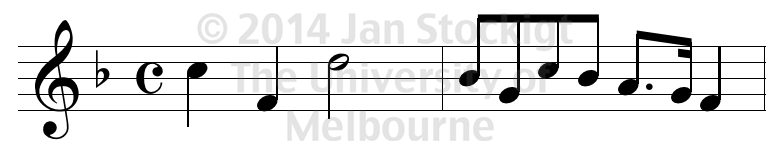
Schranck No. III | Z. 25. Fach 3. Lage | No: 2) Cantata | ad Sepulchrum Sacrum | C. A. T: e Coro | Deus Dux | co’ WWni Viola e Basso | Partitura sola | del Sigr Zelencka | Incipit.
Schranck No. III | Lit. Z. 22. Fach 4. [Lage] | [illegible] | à 3 voci | C. A. T. e Coro | co’ WWni Oboi Viola ed Cemb | Partitura sola | del [Sigr Zelencka] | Incipit.
The autogr. title on blue-grey wrapper (damaged and only partly legible) relates that this work was written for performance at the Clementinum College at the request of Zelenka’s one-time Prague patron: Count Hartig
Deus Dux: | Musica facta | ad Sepu[l]crum | Domini | In Magno Collegio Clemen|tino Pragae, | composita [?] | ad requisitionem | Illustrissimi DDni. Comitis | Do. Hartig A: C: R: Mai. | Consiliarij et in Regno Boe | hemia locumtenentis, | Viennae [?] Austria | Joanne Disma Zelenka | 1716. (Transcription taken from Zelenka-Dokumentation, 105–6, Dok. 5):
It now seems unlikely that Zelenka travelled to Venice in 1716, even though funds were made available in 1715 for this purpose. According to an article on Dresden court oboist Johann Christian Richter, both Richter and the Dresden court violinist Johann Georg Pisendel are the only Dresden musicians known to have entered quarantine in March 1716 before travelling to Venice. See Samantha Owens, 'Richter, Johann Christian,' in the Lexikon der Holzblasinstrumente, 608–609. Zelenka’s offertorium Currite ad aras (ZWV 166, see III/Z/13/2) was dated ‘à Vienna | li 13. Juni: 1716’.
Nevertheless, I have speculated (Jan Dismas Zelenka, 40–41) that by the time Deus Dux was composed, Zelenka had become aware of stylistic elements of Venetian music.
In the ‘Catalogo della Musica di Chiesa’ (c1784) score only is listed under 3. Cantata | Ad Sepulchrum Sacr: No: 2 Deus Dux a 3 voci, Sopr. Contr. e Ten. con Stromti. (III/Z/22/4).
Schranck No. III | Z. 25. Fach 3. Lage | No: 2) Cantata | ad Sepulchrum Sacrum | C. A. T: e Coro | Deus Dux | co’ WWni Viola e Basso | Partitura sola | del Sigr Zelencka | Incipit.
Schranck No. III | Lit. Z. 22. Fach 4. [Lage] | [illegible] | à 3 voci | C. A. T. e Coro | co’ WWni Oboi Viola ed Cemb | Partitura sola | del [Sigr Zelencka] | Incipit.
The autogr. title on blue-grey wrapper (damaged and only partly legible) relates that this work was written for performance at the Clementinum College at the request of Zelenka’s one-time Prague patron: Count Hartig
Deus Dux: | Musica facta | ad Sepu[l]crum | Domini | In Magno Collegio Clemen|tino Pragae, | composita [?] | ad requisitionem | Illustrissimi DDni. Comitis | Do. Hartig A: C: R: Mai. | Consiliarij et in Regno Boe | hemia locumtenentis, | Viennae [?] Austria | Joanne Disma Zelenka | 1716. (Transcription taken from Zelenka-Dokumentation, 105–6, Dok. 5):
It now seems unlikely that Zelenka travelled to Venice in 1716, even though funds were made available in 1715 for this purpose. According to an article on Dresden court oboist Johann Christian Richter, both Richter and the Dresden court violinist Johann Georg Pisendel are the only Dresden musicians known to have entered quarantine in March 1716 before travelling to Venice. See Samantha Owens, 'Richter, Johann Christian,' in the Lexikon der Holzblasinstrumente, 608–609. Zelenka’s offertorium Currite ad aras (ZWV 166, see III/Z/13/2) was dated ‘à Vienna | li 13. Juni: 1716’.
Nevertheless, I have speculated (Jan Dismas Zelenka, 40–41) that by the time Deus Dux was composed, Zelenka had become aware of stylistic elements of Venetian music.
In the ‘Catalogo della Musica di Chiesa’ (c1784) score only is listed under 3. Cantata | Ad Sepulchrum Sacr: No: 2 Deus Dux a 3 voci, Sopr. Contr. e Ten. con Stromti. (III/Z/22/4).
Stamps
Sächs. Landesbibliothek. Depositum der Kath. Hofkirche (barely legible)
Eitner
V. 10 (1904), 337: Zelenka, Johann Dismas [...] In Dresde. kath. Kirche [...] 3 Kantaten
SLB Card Catalog
Mus. 2358-D-76<br />
Zelenka, Giovanni Dismas: <br />
[Deus Dux fortissime. Z 60 ] Musica facta ad Sepulchrum Domini in Magna Collegio Clementino Pragae, composita . . . 1716. (für SAB Soli, je SATB Coro, vl solo, 2 vl, vla u. bc). Partitur = Ms. autogr, 1716. 1 Heft: 26 S. 4to
Zelenka, Giovanni Dismas: <br />
[Deus Dux fortissime. Z 60 ] Musica facta ad Sepulchrum Domini in Magna Collegio Clementino Pragae, composita . . . 1716. (für SAB Soli, je SATB Coro, vl solo, 2 vl, vla u. bc). Partitur = Ms. autogr, 1716. 1 Heft: 26 S. 4to
Status
Score of Deus Dux (Mus. 2358-D-76) held by SLUB.
Identification
ZWV 60
Sort Order
03/25/03
Collection
Citation
“ZELENKA, Gio. Dis.,” Catalogue of the Music Collection of the Dresden Catholic Court Church 1765, accessed October 28, 2026, http://omeka.cloud.unimelb.edu.au/hofkirchecatalogo1765/items/show/4374.